My writings belong to me except when specified otherwise. Please don't plagiarize and, out of decency, tell me if you've decided to quote or link to my writings. Finally, understand that you may not agree with everything I write. I respect your beliefs, I hope you will also respect mine.

Sunday   October   5   2008


Books Books and More Books


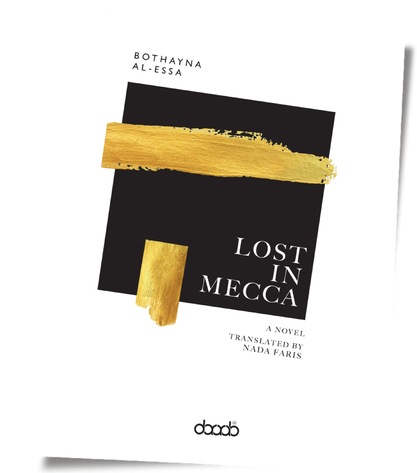
I went bonkers in Dubai and spoiled myself rotten. I think part of me was subconsciously wrestling with the notion that after Eid, I wouldn’t be able to read what I want to read for a while (because I start MA classes on Sunday) and so I went on a shopping spree. Most of the books I bought were classical, with a good amount of Fantasy, some pop novels, and a lone history. Allow me to list them:

1- The Canterbury Tales - Chaucer

2- The Last of the Mohicans - Cooper

3- The Christmas Books - Dickens

4- Madam Bovary - Flaubert

5- Jude the Obscure - Hardy

6- The Mayor of Casterbridge - Hardy

7- The Scarlet Letter - Hawthorne

8- The Portrait of a Lady - James

9- The Jungle Book - Kipling

10- Moby Dick - Melville

11- Black Beauty - Sewell

12- Treasure Island - Stevenson

13- Mrs. Dalloway - Woolf

14- Anna Karenina - Tolstoy

15- The War of the Worlds - H. G. Wells

16- A Concise History of the Modern World - William Woodruff

17- Victory of Eagles [book 5] - Naomi Novik

18- Crossroads of Twilight [book 10] - Robert Jordan

19- Jonathan Strange and Mr. Norrell - Susana Clarke

20- The Shakespeare Secret - Jennifer Lee Carrell

21- On Chesil Beach - Ian McEwan

Moreover, I finished two books while I was there: Dissolution by C. J. Sansom, and On Chesil Beach by Ian McEwan. I also came up with a “Fiction Book Review” system that would enable me to assign suitable grades to books instead of the current way in which I give a grade only based on the overall affect of the book. I’ll be posting three reviews using the new system whenever I can.

Sunday   October   5   2008


A Proper Hello


Hey hey hey. I haven’t congratulated anyone on Eid because I was away, so this is a proper greeting. Happy belated Eid Mubarak! I spent mine in Dubai and though it’s so culturally advanced, its jugular was exposed on this trip. Thus, I would like to raise awareness (and hopefully some charity) to help Dubai with its fatal flaw. Help me, dearest readers, to come up with a decent amount of money to help Dubai fund a:

PUBLIC BATH

Why? Because people reek! I thought myself back in 15th Century England (you know I’ve never been there, but good writers captured the stench). You walk in a mall and have to stuff your nose so as not to double over and vomit. For crying out loud, even hotel personnel are stinky. Once, my brothers and I were leaving our hotel room to go to the swimming pool and gym respectively. This manager-type employee entered the elevator with us. My brothers and I all held our breaths. When the elevator stopped at our required floor, we leaped out and sharply inhaled.

“Nada..” breathed my youngest brother.. “I see…I see what you mean ..”

“What’s his bloody excuse?” I found myself screaming. “He’s not some construction worker who has to be out all day doing some form of manual labour! He’s in charge of this entire floor! Hell, he could even nip into an unused room and shower because this is preposterous!”

I mean I could understand if he had come out of the gym, but to come out of a room (he was inspecting it) smelling like an un-flushed toilet? And this is a 5 star hotel. But I don’t blame the hotel because as I’ve noticed, body odour is a monumental issue in Dubai. In Kuwait, we have certain people whose stink can slap you into an irrecoverable coma, but you don’t suffer when you walk into a Mall, or from Hotel personnel, or waiters, or people holding high positions. And if you do, often the issue is individual. For instance, you smell one person and you complain about him for days. But in Dubai…everybody smells bad from the highest class to the lowest, from the expensive private places to the public places. This is why we all need to chip in and buy a public bath for them.

Saturday   September   27   2008


Initial Thoughts on “Dissolution” by C. J. Sansom


I finished The Name of The Rose yesterday, and when I woke up today I began reading Dissolution by C.J. Sansom. I didn’t want to begin Gone With the Wind soon because I knew it would be a deep read. Instead, I needed something practical to lug around during Eid and, at the same time, something that was a simple read. I tried updating my blog yesterday but the connection was revolting. The service is much better today, however, I am gripped by a most frustrating flu, so I won’t stay at the computer long. Indeed, I will crawl back into my bed and continue reading the repulsive novel. I’ll just leave you with my initial thoughts.

I was surprised when I read a number of pages and found ample parallelisms with the previous novel. A murder happens in a Monastry. The abbot asks for a detective-like investigator who attends with a side kick to jump-start the whole Sherlock Holmes plus Doctor Watson plot. Similar so-called-sins occur within the Monastry, namely, homosexuality. That’s when I stopped reading and leafed through the numerous reviews and, lo and behold, I came across the following two:

‘As clever and enthralling as The Name of the Rose … Mathew Shardlake deserves a place in the pantheon of detective fiction,’ - Tablet

‘A strong competitor to Umberto Eco’s great monastic whodunnit, The Name of the Rose‘ - Scotland on Sunday

I disagree one thousand percent! The novel cannot be compared to The Name of the Rose! The writing is awful, dodgy, unsuitable for the time piece and awkward at most. The depth of the novel is embarrassing. Even his tragic mimicry of Eco’s work is shameful. Observe the following two scenes. The first is found in The Name of The Rose where the inquisitor (our detective) is conversing with the abbot of the monastery. The abbot was distressed because of some things he learned during confession, but because he heard them during confession, then by law of his religion, he wasn’t able to expose them. In English: a monk, especially an abbot of the bloody monastery, cannot reveal what goes on during confession! However, a crime had been committed and the detective must, in the end, discover the culprit. So he (the detective) must figure out the secret of the confession elsewhere. Towards the end of the novel, the detective tells the abbot:

The Name of the Rose

“Your Sublimity is thinking of some deed he learned about in confession…” The abbot looked away, and William continued: “If Your Magnificence wants to know whether I know, without having learned it from Your Magnificence, that there were illicit relations between Berengar and Adelmo, and between Berenger and Malachi, well, yes,” p. 445

On the other hand, in our cheap imitation, we have a poof of an abbot who’s a gossip as well as a man without pride. Whereas Eco’s abbot does everything he can to preserve the honor of his monastery, Sansom’s abbot seemed to jump at the chance of some gossip. No sooner does the lawyer (the detective of the crimes) asks about a certain character, than the abbot spills his sexual history!

Dissolution

The abbot fiddled nervously with the sleeve of his habit. “Simon Whelplay did speak in confession of — certain carnal lusts. Towards Brother Gabriel. But sins of thought, sir, only thought.  Brother Gabriel did not even know.  He has been pure since the — the trouble two years ago.” p. 134-135.

Why would the abbot expose what was said in confession? Especially if nothing had bloody happened! I mean the lad expressed “certain carnal lusts’ and he wants to distribute this knowledge to the world? Then why doesn’t he go ahead and soil Brother Gabriel’s reputation while he’s at it. Oh hell…he did!

Also, can someone please explain to me why a fit and “attractive” woman is working in the monastery? Yes dears. There is only one woman working in the monastery—and she happens to be attractive…. Oh, and she cried over the death of a rooster, but not over the terrible decapitation of a brother monk… I’m not making this up… After the woman went on about the energetic rooster, the narrator says “To my surprise her large blue eyes filled with tears and she bowed her head. Evidently she had a warm heart as well as a stout one.” p. 136. I swear I wanted to chuck the novel into the nearest dustbin. This is a model of a trash novel.

Oh and if all that’s not enough, let me show you an example of his creative writing. Bear in mind that the time period is 1537 (during the reign of Henry VIII) and the narrator is an educated lawyer. In fact, this protagonist is so sharp that he was employed by none other than the illustrious Thomas Cromwell who was rising rapidly in the royal hierarchy. And he writes the following:

At school in Lichfield there were many jokes about what monks got up to in there, but privy at Scarnsea was ordinary enough. p. 137

There were many jokes, were there? About what monks “got up to in there?” Sure sounds like an educated lawyer of the 1500s… NOT! Sounds like a bloody teenager writing a journal entry! Blekh! Must be done with this novel as soon as possible for I don’t know how long I would be able to handle such low quality.

Yours sincerely,

Nada Faris

Wednesday   September   24   2008


50 Greatest Villains In Literature


The Telegraph recently compiled a list of 50 greatest literary villains. You can view the list here. I felt somewhat stupid because I wasn’t familiar with several antagonists but when I did come across someone I knew I smiled like an idiot… In other words, I felt foolish throughout. I wholeheartedly agree with the first position, however. Anyhow, time for the list:

50 Helen Grayle/Velma Valento from Farewell, My Lovely, by Raymond Chandler

Described as “a blonde to make a bishop kick a hole in a stained glass window”, Helen Grayle is the most memorable of Raymond Chandler’s femmes fatales. She leaves a trail of bloody victims in her wake as she tries to hide her past as flame-haired nightclub singer Velma Valento.

49 Steerpike from Titus Groan and Gormenghast, by Mervyn Peake

The darkest shadow within the high gothic of Gormenghast, Steerpike advances from the castle’s nightmarish kitchens to the highest social echelons, via murder. But he is also something of an anti-hero, a challenge to a calcified establishment - the original Angry Young Man?

48 Shere Khan from The Jungle Book stories, by Rudyard Kipling

His name and character, if not his physical appearance or his species, are based on a Pashtun prince. And there is something refreshingly simple about his aims: to eat Mowgli. To this end he sows dissent among wolf pack (enough alone to get him down to the eighth circle of Dante’s hell) and causes Mowgli all sorts of trouble.

47 Long John Silver from Treasure Island, by Robert Louis Stevenson

The former sidekick of the pirate Captain Flint (for whom his parrot is named) may have one leg, but he is physically brave, likeable and a natural leader of men, especially after he kills one who won’t join his mutiny. Switches sides whenever he can, and gets away in the end.

46 Moriarty from The Final Problem, by Arthur Conan Doyle

Got a chair at one of our smaller universities after his work on the Binomial Theorem, but the criminal strain in his blood won out. The “Napoleon of Crime”, motionless “like a spider at the centre of his web”, until his fall in Switzerland, may be called James. Or that may be his brother.

45 The White Witch from The Lion, the Witch and the Wardrobe by C S Lewis

Beautiful, proud, cruel and with an excellent line in confectionery, though since it’s always winter and never Christmas, you won’t get any in your selection box. At her house, all towers and statuary, she comes to an end as sticky as her Turkish delight.

44 Milo Minderbinder from Catch-22, by Joseph Heller

Milo is the squadron’s mess officer, a prototypical capitalist who accepts payment from the Germans to bomb his base. He is a comic character until the last, when it turns out that he has sold the morphine in the medical kits, just when Yossarian and the kid in the back of the plane most need it.

43 Fred from The Handmaid’s Tale, by Margaret Atwood

Placing America under the yoke of a brutal Christian Taliban would have been bad enough, not to mention reducing all women to whores and baby-factories. Commander Fred really loses sympathy, however, when it emerges that he used to work in marketing. Hiss!

42 Grendel’s Mother from Beowulf

There’s nothing in the poem to suggest that Grendel’s old mum looked anything like Angelina Jolie. Hellbent on revenge, this inhuman hag drags Beowulf down to her lair at the bottom of a pond. Despite having been written at least a millennium ago, Beowulf has proved enduringly influential, inspiring the 1983 film Jaws 3-D.

41 O’Brien from Nineteen Eighty-Four, by George Orwell

Careworn, cynical, intelligent, sympathetic and able to turn off the telescreen: the voice of 20th-century relativism in the overalls of the Inner Party. “One does not establish a dictatorship in order to safeguard a revolution; one makes the revolution in order to establish the dictatorship.”

40 Captain Hook from Peter and Wendy, by J M Barrie

Captain James Hook’s reputation suffers from selective emphasis, since although he was an old Etonian and was never happier than when plunging his hook into people, he also has a gentle side. He could play the flute and the harpsichord (it does not matter how), loved Wordsworth and Coleridge, and was a stickler for form. And, come on, Peter Pan is a little swine, isn’t he?

39 Moby-Dick from Moby-Dick by Herman Melville

Captain Ahab’s nemesis sends him round the bend for having the cheek to escape harpooning and its blubber ripped out with hooks. “The White Whale swam before him as the monomaniac incarnation of all those malicious agencies which some deep men feel eating in them.” Or perhaps it’s only a whale.

38 Gil-Martin from The Private Memoirs and Confessions of a Justified Sinner, by James Hogg.

Demon? Doppelganger? Symptom of dementia? Whatever the identity of the tempter Gil-Martin in James Hogg’s one-off work of 19th-century post-modernism, his effect on the fragile Calvinist intellect of the protagonist is instant and terrible. “I have no parents save one, whom I do not acknowledge,” claims Gil-Martin, smoothly urging his protegé towards bloodshed and terror in one of the creepiest theological polemics ever put to paper.

37 Surtur in A Voyage to Arcturus, by David Lindsay

No one in this anomalous classic of science fiction comes off very well. Despite his best intentions, the hero, Maskull, keeps killing people. Surtur is the greatest villain in the universe because he is its malevolent maker. This is fiction, remember.

36 The Judge from Blood Meridian, by Cormac McCarthy

Twenty-four stone and hairless as a dolphin, the scalp-hunter Judge Holden moves through Cormac McCarthy’s infernal West like a plague. Besotted with violence, he’s less a man than a metonymn for human depravity. “What’s he a judge of?”, one character asks. Silly question.

35 Mrs Coulter from the His Dark Materials trilogy, by Philip Pullman

The beautiful, elegant, widowed Mrs Coulter is chief “Gobbler” in Philip Pullman’s fantasy trilogy for kids, but she isn’t nearly as friendly as she sounds. She wants to amputate children’s souls - or “daemons” - in the name of the Magisterium. She eventually sees the error of her ways, but - let’s face it - she’s no Mary Poppins.

34 Clare Quilty from Lolita, by Vladimir Nabokov

Enchanted hunter and sexual deviant Quilty stalks Humbert Humbert and his beloved like a malevolent ghost. He runs off with the beleaguered Lolita after posing as her uncle, but cruelly dumps her when she refuses to star in one of his home-made blue movies.

33 Count Fosco from The Woman in White, by Wilkie Collins

Chubby, well-dressed and charming bird-fanciers aren’t usually this villainous, but Count Fosco is the brains behind the scheme to deprive Laura Fairlie of her wealth and sanity. It is his calculating cruelty that is so chilling: the way he admires Laura’s sister and yet is quite happy to destroy her. And he’s Italian, which is what undoes him at the end.

32 Signor Montoni from The Mysteries of Udolpho, by Ann Radcliffe

Montoni - another Italian who shares Fosco’s aim, but not his charm - is the prototypical gothic villain: haughty, brooding, calculating and greedy. He tries - all right, in the end unsuccessfully - to deprive an heiress of her fortune by locking her in a castle and generally showing her a bad time.

31 Tom Ripley from The Talented Mr Ripley, by Patricia Highsmith

So much more clever and, when he wants to be, charming than Dickie Greenleaf. Thinking he’d be much better at being rich, too, he goes on to prove it. In later books he knows about art, and bumping people off on trains.

30 Bill Sikes from Oliver Twist, by Charles Dickens

Hard to find much to say in favour of Bill Sikes. Robber, child abuser, murderer of a poor-but-good-hearted prostitute, beater of dogs, resident of Bethnal Green. An all-round rotter.

29 Marquise de Merteuil from Les Liaisons Dangereuses, by Pierre Choderlos de Laclos

Laclos claimed that readers were supposed to see through the glamorous Marquise de Merteuil, and recognise the deep corruption of her soul. But perhaps because of its form (in letters), or perhaps because of the author’s intentions, the cruel marquise is seductive and witty. Stendhal claimed to have met the original when she was a deformed old woman - she petted him and offered him pickled walnuts.

28 Quilp from The Old Curiosity Shop, by Charles Dickens

A lank-haired dwarf in an abusive relationship with his wife, Quilp spends much of the novel in pursuit of Little Nell. But somehow, with his simian acrobatics and the coal-dark comedy of his baroque threats, he represents life, as opposed to the morbid Nell.

27 Alec d’Urberville from Tess of the d’Urbervilles, by Thomas Hardy

As if Alec d’Urberville’s ruination of Tess weren’t evil enough, he goes about with a smouldering cigar and a pitchfork. But the man who marries her is called Angel, which shows that all men are bastards. Then it turns out to be the gods’ fault. They’re bastards and all.

26 Cthulhu from The Call of Cthulhu, by HP Lovecraft

Gigantic tentacular star-spawned Presence in Lovecraft’s baroque cosmogony, sleeping in a sunken, “non-Euclidean” city until the time comes for it to swallow the world’s soul. Frequently evoked in barbaric, indecipherable language, although some people quite like Lovecraft’s prose. Gloriously, you can now buy a T-shirt reading: “What part of ‘ph’nglui mglw’nafh Cthulhu R’lyeh wgah’nagl fhtagn’ don’t you understand?”

25 Sauron from The Lord of the Rings, by J R R Tolkien

Withering, implacable, burning, the unsleeping eye of Sauron scours Middle Earth ceaselessly for the Ring. “The Eye was rimmed with fire, but was itself glazed, yellow as a cat’s, watchful and intent, and the black slit of its pupil opened on a pit, a window into nothing.” Things would all have been so different if Middle Earth had only had Optrex.

24 Don Juan in (among others) El Burlador de Sevilla, by Tirso di Molina

One of literature’s favourite subjects, Don Juan - libertine, serial seducer, murderer - turns up time and again, but the one thing we all agree on is that he ends up - rightly - in hell. Byron cast him as an innocent, but that was Byron.

23 The Joker from Batman, by Bob Kane, Bill Finger and Jenny Robinson

Batman’s arch-nemesis, this pointy-chinned, green-haired loony never stays in Arkham Asylum for long. Nope. He’s soon back out there wreaking murderous, purple-suited havoc on the innocent populace of Gotham. Resistant to psychotherapy.

22 Ernst Stavro Blofeld from the James Bond novels, by Ian Fleming

Hijacker of nuclear missiles. Deranged overseer of a Japanese Garden of Death. 007’s arch nemesis is after not just money, but social advancement. He claims to be a count. Who could disagree? Top style tips: in the Alps, he wears green contact lenses, to lessen, he claims, the glare from the snow.

21 Augustus Melmotte from The Way We Live Now, by Anthony Trollope

When God created Robert Maxwell, many pointed out that Trollope had got there first with his portrait of the mysterious foreign financier who is feted by the grandees of London society until they discover he’s been swindling them.

20 Mr Hyde from Strange Case of Dr Jekyll and Mr Hyde, by Robert Louis Stevenson

A nondescript little man, though Utterson felt a “powerful impression of deformity”. Establishes his wickedness by stamping on a little girl; soon moves on to further atrocities. After Jekyll runs out of restorative salts, Hyde makes a final recourse to pharmacology, to the smell of kernels.

19 Edmund from King Lear, by William Shakespeare

The ultimate bastard. Tormented by the injustices of his illegitimate birth, he frames his own brother, plays the love rat with Goneril and Regan, and finally orders the execution of Lear and Cordelia. In his own words: “Now, gods, stand up for bastards!”

18 Mrs Danvers from Rebecca, by Daphne du Maurier

“Last night I dreamt I went to Manderley again” begins du Maurier’s ingenuous narrator, but Mrs Danvers, the housekeeper who torments the young woman and almost persuades her to commit suicide, is more likely from a nightmare. In the end it all ends up happily enough after she is burned to a crisp. Or is she?

17 Patrick Batemen from American Psycho, by Bret Easton Ellis

The smiling face of Wall Street: enjoys fine dining, couture, Genesis, Talking Heads, rape, murder and dismemberment. What ensures Bateman’s longevity and the success of Ellis’s vicious satire, is that none of his enthusiasms appear to bore him any less than the others. He’s a murderous factfinding Martian, impossibly remote from human life, and hilarious and revolting in equal measure.

16 Ferdinand from The Duchess of Malfi, by John Webster

Creepily fond of his twin sister, the duchess, Ferdinand reacts badly when she marries her lowly steward Antonio, threatening to turn their children into soup. He tries to cheer himself up by having her executed, but ends up driven insane by guilt.

15 Svengali from Trilby, by George du Maurier

In the bohemia of mid-19th-century Paris, the bare-footed beauty Trilby falls under the influence of Svengali. Like Fagin’s, the character of his villainousness is Jewish. When hypnotised by Svengali, Trilby can sing wonderfully. Tragedy follows.

14 Hannibal Lecter from Red Dragon, by Thomas Harris

A veritable aristocrat of anthropophagy, Harris’s cracked psychiatrist is a cannibal stew of savagery and sophistication. He sautees the brains of the living. He pairs human liver with Amarone. He appreciates opera. But if he’d only listened to Flanders and Swann he’d know that eating people is wrong.

13 Count Dracula from Dracula, by Bram Stoker

At first an old man with, contrary to popular belief, a long white moustache and - in accordance with popular belief - prominent, peculiarly sharp teeth. A non-smoker, like so many rotters. The sea air at Whitby does him a power of good.

12 Barabas from The Jew of Malta, by Christopher Marlowe

When Malta raids the coffers of its Jewish inhabitants, the plutocrat Barabas goes on a spree of scenery-chomping vengeance, kicking off a Turkish invasion and poisoning a nunnery. Among other achievements, he invents the classic “wench is dead” defence for adultery.

11 Pinkie Brown from Brighton Rock, by Graham Greene

A teetotal 17-year-old Catholic who roams Brighton with a razor blade and a bottle of vitriol, Pinkie is the prototype of every stab-happy teenage thug, although one with a very Greene-ish concern for his immortal soul.

10 Vindice from The Revenger’s Tragedy, by Thomas Middleton

Filled with bile from his persistent melancholy - his beloved was killed by the duke - Vindice decides the best way to avenge her is to make the duke lock lips with her poisoned corpse. Fair enough: the duke got what was coming to him, as do the many others who fall under Vindice’s furious sword, but if you do think of yourself as God’s scourge, you probably shouldn’t be enjoying it this much.

9 Mr Kurtz from Heart of Darkness, by Joseph Conrad

In Europe, he is an organist and scholar with a charming fiancée; but in Africa, Mistah Kurtz prefers genocide and surrounding himself with impaled heads. In the ivory trade, this kind of behaviour used to be called unsound; even today’s ivory smugglers might think it inappropriate.

8 Claudius from Hamlet, by William Shakespeare

Hamlet is sure who the villainliest villain is. “Bloody, bawdy villain!” he exclaims, and just to remove any doubt: “Remorseless, treacherous, lecherous, kindless villain!” Yes, it’s Claudius, the effects of whose villainy we observe on Hamlet.

7 Ambrosio from The Monk, by M G Lewis

The forerunner of the stereotype of the hypocritical priest, Ambrosio uses his pious exterior to mask a multitude of unsavoury urges. His first transgression is succumbing to his lust for temptress-disguised-as-a-monk Matilda. From then on it’s a slippery slope to damnation, culminating in the novel’s luridly gothic climax.

6 Robert Lovelace from Clarissa, by Samuel Richardson

The original rake, Lovelace engages in a prolonged battle of wits with the virtuous Clarissa Harlowe. He weaves an impressively intricate web of lies in his attempts to rob Clarissa of her honour: intercepting her mail, forging letters from her best friend - nothing is beyond, or beneath, this man.

5 Voldemort from the Harry Potter series by JK Rowling

His motivation may not be clear, but you can’t deny his ingenuity. Sadly, the “most powerful Dark wizard who ever lived” is thwarted time and again by Harry Potter, so, in a bid for immortality, he splits his soul into Horcruxes, which is a bad thing to do.

4 Iago from Othello, by William Shakespeare

Othello’s “honest, honest” subordinate, quietly intent on the destruction of his boss’s world for reasons whose slightness has nettled critics ever since. Coleridge’s formulation “the motive-hunting of motiveless malignity” seems the best answer: behind the smiles and jokes, Iago’s mind is pure seething white noise.

3 Cruella de Vil from The Hundred and One Dalmatians, by Dodie Smith

Recognising the perfect business synergies between her likes (pepper, hot things, fur coats and having one side of her hair white, the other black) and dislikes (animals), Cruella sets about turning the one into the other. To some she is a perefectly self-actualised human, to others a monster; it depends on what you think of dogs.

2 Samuel Whiskers from The Tale of Samuel Whiskers, by Beatrix Potter

To the stark terror of generations of toddlers, this chimney-dwelling monster rat ambushes Tom Kitten and does everything in his ratty power to bake him into a roly-poly pudding and eat him. Shudder-making terror from the doyenne of anthropomorphic animal evil.

1 Satan from Paradie Lost, by John Milton

There’s a school of thought that the villain of Paradise Lost is actually God. But Milton wouldn’t, at least consciously, have subscribed. Satan is the rebel’s rebel, the villain’s villain - “Hell within him for within him Hell/ He brings…” Easily clinches the top spot in our evil-dude hit parade.

Tuesday   September   23   2008


I Know Where I’ve Been


I’ve heard the Angel of Music and she told me where she had been! This song can put me in a state of reverie. I’ll leave you with Queen Latifah’s song from Hair Spray.

I Know Where I’ve Been

There’s a light in the darkness

Though the night is black as my skin

There’s a light burning bright showing me the way

But I know where I’ve been

There’s a cry in distance

It’s a voice that comes from deep within

There’s a cry asking why

I pray the answer’s up ahead yeah

Cause I know where I’ve been

There’s a road we’ve been travellin’

Lost so many on the way

But the riches will be plenty

Worth the price, the price we had to pay

There’s a dream (dream) in the future

There’s a struggle that we have yet to win

And there’s pride in my heart

Cause I know where I’m going, yes I do

And I know where I’ve been, yeah

There’s a road (there’s a road) we must travel (we must travel)

There’s a promise (there is a promise) we must make (that we must make)

But the riches (oh but the riches) will be plenty (the riches will be plenty yeah)

Worth the risk (worth the risk) and the chances (and the chances we take) that we take!

There’s a dream yeah yeah yeah yeah in the future

There’s a struggle (struggle) that we have yet to win (we have yet to win)

Use that pride (pride) in our heart (in our hearts)

To lift us up unto tomorrow

Cause just to sit still will be a sin

I know it, I know it, I know where I’ going

Lord knows I know where I’ve been

Oh, when we win I’ll give thanks to my God

Cause I know where I’ve been!

Saturday   September   20   2008


Initial Thoughts On “The Name of the Rose”


I went to Jarir Bookstore a number of days ago and bought: Gone with the Wind by Margaret Mitchell, North and South by Elizabeth Glaskell, and To Kill a Mocking Bird by Harper Lee. These I purchased because of recommendations and also their reputations. I then bought Don Delillo’s Underworld because “National Bestseller,” was written on the top of the front cover and, on the back, two recommendations stood out; one by Salman Rushdie calling it “a magnificent book by an American master,” and the other was by Michael Ondaajte saying that “This book is an aria and a wolf whistle of our half-century. It contains multitudes.” Moreover, the book won the Howells Medal of the American Academy of Arts and Letters for the most distinguished work of fiction of the past five years. The author of the book, himself, is the proud owner of the following awards: the National Book Award, the PEN/Faulkner Award and the Jerusalem Prize. I’ll tell you what I thought about it after I read it. But before I left, I got another book. This one, I bought because of its title and the synopsis written on the back.

The Name of the Rose

The year is 1327. Franciscans in a wealthy Italian abbey are suspected of heresy, and Brother William of Baskerville arrives to investigate. When his delicate mission is suddenly overshadowed by seven bizarre deaths, Brother William turns detective. His tools are the logic of Aristotle, the theology of Aquinas, the empirical insights of Roger Bacon - all sharpened to a glistening edge by wry humor and a ferocious curiosity. He collects evidence, deciphers secret symbols and coded manuscripts, and digs into the eerie labyrinth of the abbey, where “the most interesting things happen at night. A spectacular popular success, The Name of the Rose is not only a narrative of a murder investigation but an astonishing chronicle of the Middle Ages.

The author’s name sounded familiar but hadn’t rung any bells at the time. I turned to the prologue and read the following: “In the beginning was the Word and the Word was with God, and the Word was God.” It was settled. Not only was I going to buy this book, but that I was to delve into it immediately after completing The Phantom of the Opera. And that is what happened.

The first thing that struck me, when I began reading the novel, was the style of the language. It was love at first sight! I loved the way the sentences were constructed. I loved the imagery. I loved the loll of my tongue when I uttered the words out loud. This made a specific discovery shocking: the fact that the book is in translation! I’ve recently read both The Hunchback of Notre Dame and The Phantom of the Opera in translation and the fact of their translation was evident from the writing. The Name of the Rose is translated from the Italian by William Weaver and it actually says that inside the book. Hence the irony, the earlier books were not translated well but they did not mention the translator’s name thereby giving the reader the allusion that no intermediary existed between the writer and reader, while The Name of the Rose sounds fluid and smooth but a translator’s credit greets you on the first page reminding you that you are reading but a copy of the original text.

The book is 502 pages. Not the biggest book I’ve read; nor the smallest either. But one mark that might work against the novel is its speed: it’s as slow as a tortoise in a desert. I do enjoy the historical, philosophical, (architectural), literary, and theological excerpts that are numerous but I don’t like that nothing really of value happens for quite some time.

I was in Al-Muhalab today and did a bit of reading. I’m currently at page 92 and already I have a list of quotes that impressed me. I’ve always said this: I love to read books that are not simply what they are but that include a variety of layers, themes, and motifs that are all constructed with high-quality tools by a skilled artist.

In this book Umberto Eco (an Italian medievalist, semiotician, philosopher, literary critic and novelist) deals with many important subjects like Midieval religious mentalities and exploration of words. I shall leave you with three quotes before I retire:

http://nadafaris.com/site-images/br.jpg

“Yes, lust. There was something . . . feminine, and therefore diabolical, about that young man who is dead. He had the eyes of a maiden seeking commerce with an incubus. But I said ‘pride’ also, the pride of the intellect, in this monastery consecrated to the pride of the word, to the illusion of wisdom.” - page 60.

http://nadafaris.com/site-images/br.jpg

“The first half had already been covered with writing, and the monk had begun to sketch the illustrations in the margins. [ . . . ] This was a psalter in whose margins was delineated a world reverse with respect to the one to which our senses have accustomed us. As if at the border of a discourse that is by definition the discourse of truth, there proceeded, closely linked to it, through wondrous allusions in aenigmate, a discourse of falsehood on a topsy-turvy universe, in which dogs flee before the hare, and deer hunt the lion. ” – page 76

http://nadafaris.com/site-images/br.jpg

“God can be named only through the most distorted things. And Hugh of St. Victor reminded us that the more the simile becomes dissimilar, the more the truth is revealed to us under the guise of horrible and indecorous figures, the less the imagination is sated in carnal enjoyment, and is thus obliged to perceive the mysteries hidden under the turpitude of the images. . .” – page 80

Thursday   September   18   2008


Review - The Phantom of the Opera


Grade: B+

Major spoilers for The Phantom of the Opera and The Hunchback of Notre Dame

TITLE:

The Phantom of the Opera

AUTHOR:

Gaston Leroux

PUBLISHER:

Barnes & Noble

DATE OF PUBLICATION:

1992

PLACE OF PUBLICATION:

New York

NUMBER OF PAGES:

264

ISBN:

0-88029-905-3

I first desired to read the book when I watched (and fell madly in love with) the 2004 Phantom movie, but Kuwait had been sans Phantom for quite a while. I couldn’t find it anywhere. My best friend, however, had better scouting abilities and, one day, she came over and gave me a hardcover of The Phantom of the Opera as a gift. Needless to say, I was beyond elation! Nevertheless, I had to put it on the list because my dearest best friend who spoils me thoroughly had also just given me David Copperfield and The Hunchback of Notre Dame. Well, I delved into The Phantom of the Opera as soon as I was done with Hunchback. I couldn’t read as much or as often as I wanted because I am currently remarkably busy. But I did make some steady progress until today: until I finished the book that is.

My first impression was of disappointment. I didn’t particularly like Leroux’s style of writing, but as I read it in English, I might hold the translator accountable for that. Who’s the translator? I don’t know. It doesn’t say. But bear in mind that the book was published in 1992, and back then, translators weren’t looked at as significant participants. Sure, people desired translators to diffuse canonical texts to a wider audience, but the translator was often looked at as a second rate writer. Since it wasn’t the translator’s story, he had no right to be mentioned in the credits.

Therefore, my first impression was “How unlike Hugo.” Hugo was verbose, Leroux was scant. His words, theories, ideas, images, etc, were all limited. On the other hand, the idea and its composition maintained a tight clutch upon my attention. The Phantom of the Opera is a detective story set within an Opera House filled with mysteries, superstitions, passions, and music, but it’s particularly hard to pin it down to a genre or tone. When I read the novel, I found that it wasn’t comic, horror, gothic, adventure, dramatic, or even romantic in the purity of the essence. It did include segments of all, just not enough to make its tone or style standout. The author aimed to pass the novel as a “history,” by investing the letters and memoirs of characters. In a sense, it removes the reader from the text, and in another sense, it actually works for this kind of novel. But allow me to show you what I mean by a wishy-washy tone. The events of the following quote are as follows: the heroine has just disappeared in front of everybody’s eyes on stage, and the Opera House is in turmoil. The prevailing feeling is of suspense and the reader is currently conjecturing what might have happened to Christine Daae. Moreover, Mother Giry is locked inside an office and she’s knocking on the door and yelling “Oh, the scoundrels!” Furthermore, the recent managers of the Opera House are presumed to have gone mad. That’s when Leroux introduces a segment whose nature cannot really be determined.

“It’s terrible!…And what was Richard doing meanwhile?”

“What was he doing? Why, you saw him! He turned about, he bowed in front of him, though there was nobody in front of him, and withdrew backwards.’

Backwards?”

“[ . . .] Well, if they are not mad, will you explain what it means?”

“Perhaps they were practicing the figure in a ballet [laa laa laa! *cackle*],” suggested Gabriel, without much conviction in his voice.

The secretary was furious at this wretched joke, made at so dramatic a moment.

p.158

Personally, I neither thought that the joke was funny enough to be inserted in such a moment, nor the moment dramatic enough to not be able to maintain the joke. It was everything at once.

Another example is when he illustrates how Christine and Raoul kiss. Notice how the paragraph begins passionately and romantically and quickly dwindles into a befuddled type of farce.

Raoul at once threw himself on his knees before her. He swore that he would go and he entreated her never again to withhold a single hour of the ideal happiness which she had promised him. She let her tears flow. They kissed like a despairing brother and sister who have been smitten with a common loss and who meet to mourn a dead parent.

p. 122


On La Esmeralda and Christine Daae. 

One thing that I particularly enjoyed in this novel was the difference between Leroux’s characters and Hugo’s. For instance, whereas La Esmeralda is always and only a child, Christine Daae is more of a complex and natural character. La Esmeralda loved Pheobus because he looked good in his armor when he protected her. She was kind to Quasimodo but could not and would not view him as anything other than a beast on the basis of his looks. Poor Quasimodo used to give her his bed and food but, knowing that she could not look upon him without cringing, he did so at night when she was asleep and went away in the morning. She also never called upon him unless she needed his help: save me from Frollo, or fetch me my handsome soldier prompto! Similarly, when Frollo gave her the ultimatum: his bed or the gallows, Esmeralda rejected him because of his grey receding hairline and scrawny old figure. She called upon Phoebus like a child (Esmeralda is only sixteen years old).

Not so with Christine Daae. Christine hated the Phantom because he was a psychotic murderer who could not tell the difference between “good and evil,” and because she fell in love with Raoul whom she knew when she was a child. Christine is clever though, sometimes when she sees that Erik (otherwise known as O.G or the Opera Ghost) is becoming unbearable, she seduces him and tells him that she loves him. When he kept her as his prisoner she made him believe that she did not mind the corpse-like nature of his face and even promised to wear his ring—to save her Viscount lover. At the end of the novel, when the Phantom agrees to let her go and to be with her “normal” lover, the mature Daae kisses the living-corpse on the forehead as a gesture of gratitude. I don’t see Esmeralda doing anything like that. In fact, once, she was petting her goat, Djali, when Quasimodo came in and said that he was cursed because he was neither man nor beast, and that had he been a complete animal, he would have had experienced more compassion from Esmeralda.

The Hunchback and the Phantom

Another wonder difference is found in the nature of the “beast” in the novels. Both Hugo and Leroux were experimenting with the world’s obsession with “looks,” and desired to display a message that enables people to look beyond the physical aspect of man. Hugo, though, was very idealistic. We find Quasimodo as a perfect humanitarian whose intentions are always good and his loyalty profound. Since Frollo adopted Quasimodo, the Hunchback viewed him as a parent. Even when Quasimodo tried to kidnap Esmeralda, it wasn’t because he was inwardly evil, but it was because he was commanded by Frollo, and as he obeys Frollo’s every command he couldn’t refuse. However, when Esmeralda gives him water (while he was being tortured by the mob) he becomes loyal to her too and then develops a conflict in his mind. Whom shall I help/obey, Esmeralda or Frollo?

The Phantom is a different case. Although he was born ugly like Quasimodo, it was the Phantom who left his parents and not vise versa. Erik ran away at a young age and joined a circus to be exhibited as the living corpse. He learned many tricks that he later developed to entertain the Sultana. Soon after he began using his skills to kill people who threaten the Shah and built him a palace filled with trap-doors and secret passageways. When the Shah was done with him he wanted to dispose of “the trap-door lover,” but he managed to escape and build the Opera House that he resides in throughout the novel. In the Opera House, he built a torture chamber, as well as other tricks that would ward off any intruders by killing them. He blackmailed the managers, kidnapped Daae, killed people by strangling, by brutally killing him, by having a chandelier fall on their heads, and sabotaged shows. Erik hated the “human race,” and at the end of the tale, he was willing to kill everyone in the Opera House including the love of his wife and the person who saved his life. He is often described as a horrible and terrible man with a voice that thunders and, at the same time, is as soft as an angel’s. Despite his un-idealistic portrayal, Leroux says:

Poor, unhappy Erik! Shall we pity him? Shall we curse him? He asked only to be ’someone’ lie everybody else. But he was too ugly! And he had to hide his genius, or use it to play tricks with, when, with an ordinary face, he would have been one of the most distinguished of mankind!

p. 261

VERDICT

This has become a long post and so I will cut it short and lead into the verdict. I neither enjoyed the style of writing nor read a multi-layered text. What Leroux had on his side, however, was the idea itself of a Phantom in an Opera House and constructing it as if it were a detective story. I also enjoyed the characterizations. For that, I gave the novel a B+. It’s a nice short book in a simple language. I recommend it—but not highly. 

Saturday   September   13   2008


Review - The Hunchback of Note Dame


Grade: B-

TITLE:

The Hunchback of Note Dame

AUTHOR:

Victor Hugo

PUBLISHER:

Wordsworth Classics

DATE OF PUBLICATION:

1993

PLACE OF PUBLICATION:

London? (I’m not actually sure)

NUMBER OF PAGES:

449

ISBN:

978-1-85326-068-1

When I began reading the book I was remarkably discouraged. Why? Because I had Les Misérables on my mind and the stark contrast between the quality of the two books was astonishing. I did not put it aside, however, because of the compassion I had for Hugo and the understanding that The Hunchback of Notre Dame or Notre-Dame de Paris was his first novel. He hadn’t quite evolved as a prosaic writer and hadn’t developed his characters in a manner that would both allow them to live out of the page and connect with the people, as he had done in the other novel. They appear as caricatures throughout the text. Thus, I persevered, leveled my compassion and tossed my prejudice over my shoulder.

There were some moments that made me smile; especially Pierre Gringoir’s comments about Esmeralda’s goat, Djali. But the scenes that were meant to be tragic didn’t move me at all. They were extremely exaggerated. Hugo was a successful poet before turning to prose, so his novels are practically litered with poetic diction. And, while he doesn’t commit the henious crime, defined as Purple Patches by Horace and known as Purple Prose by contemporary academics, his lush and verbose articulations diminish any cathartic result. In other words, he takes quite a bit of time to get to the point. Unlike Shakespeare’s death scenes where characters manage to spurt sonorous monologues (which are equally as uncathartic) Hugo’s death scenes in Notre-Dame de Paris are over the top. There’s yelling, and scratching, and biting and clutching and tears, and soldiers and just about when it actually happens-Hugo moves onto a different chapter with a different character, doing a different thing. When he finally returns to the death scene, the reader experiences it through the lense of a different character. For instance, X is about to die when the chapter ends and for the next 10-20 pages you read about Y and what Y was doing at the time of X’s death. Then Y’s events somehow blend into the path of X and Y gets to see the final moments of X’s death.  Don’t get me wrong, I enjoy writers with a director’s vision, especially at a time that preceded the invention of movie cameras, but I believe that it subtracted emotions. Think of a storyteller narrating a death scene while standing with one leg on a moving ball, with his other leg stretched vertically by his cheek and juggling four small balls in the air. Would you not applaude his skill rather than weep at the death scene?

VERDICT

Despite all that I mentioned earlier, The Hunchback of Note Dame is actually a good read. It wouldn’t matter what adaptation you’ve seen, the book offers much more, such as plot-twists or history of characters. For instance, I never knew that Frollo was an Alchemist! In conclusion, I give the book a B- because it’s much better than the load of trash that I’ve been reading lately, but at the same time, it’s certainly not one of my favorite novels. Will I read it again? I doubt it. It was fine while it lasted though.

Friday   September   12   2008


Manners…People!


You’re walking in the middle of the mall minding your own business. Suddenly, a screech penetrates your eardrums “Hiiiiiiiiiiiiiiiiiiiiiiiiiiiiiiiiiiiiiiiiiiiiiiiiiiiiiiiiiiiiiiiiiiiii!” You tend your aching ears and ignore it. Pfft, you mutter as you drag yourself away. What’s up with high-pitched greetings lately? It seems everywhere you turn someone’s throat is emitting mind-splitting sound waves. And then you hear it again, this time it’s even louder. You growl and walk faster. Suddenly, you hear your name–in screech language. No… You contemplate, the creature can’t possibly mean me…. but she does. You know why? Because a sudden fist  clutches your arm and flings you with superhuman strength. You twist a number of times before you can compose yourself. “Holy fuck!” Is the only two words you utter.

When you’re physically steady (your head is still woosy) you blink intently to stabilize your vision. Now who do we have here? Blank. Skinny hands and legs. Dirty bleach blond hair that seems like it has neither been combed nor washed for weeks. Navy track suit. White flip-flops. A compressed nose. How compressed? To the extent that you question if she has nostrils, or if her nose is stuck together. However filthy, the image doesn’t ring any bells. You stand in front of her caressing the bruise on your arm.

Girl: Omg! How dare you not remember me!

Me: I’m sorry…I’m getting old. (I try to joke)

Girl: And fat! HAHAHA.

My first reaction was shock, then pain, then a desire to show that peice of trash woman whom she’s messing with. You want to be nasty? You picked a bad day to do so. So I quickly compose myself and laugh.

Me: Indeed! But what else can we do around here, by the way, you didn’t remind me of your name.

Girl: Oh! I’m Flana! How evil! You should have recognized me! We went to school together!

Me: Oh Flaaaaaaanaaaaaa! Hi! How are you! You’re right! You’re absolutely right! I should have recognised you but you changed!

Girl: Really?

Me: Yes! You used to be beautiful! What happened?

Girl: *blink*blink*

Me: I bet you’re working too hard. Right?

Girl: Erm..yeah, I am currently working  in–

Me: Omg you must quit! You already look terrible! You don’t want it to get worse! By the way, there’s a doctor who can fix you up.

Girl: I already have a doctor…

Me: Shit man….then he fucked you up pretty badly…

Girl: *eyes becoming teary*

Me: Hey don’t be sad…you still have your health, right?

Girl: Actually I’m anemic… and my–

Me: Everybody’s got problems, hun. Anyhoo, it’s been nice meeting you. I’m off. Catch you later–hopefully you’d have cleaned up by then. *blows fake exaggerated kisses* Taataa

And as you are walking away, you ejaculate “..bitch!” under your breath. The saddest part is, I doubt she learned her lesson. But round one goes to me.

Sunday   August   17   2008


1 step forward, 2 steps back


Yeah you guessed it, Canada’s out of the game. Here are the results of the last batch of matches.

Quarter-finals
Match Date - Time Venue Results
19 15/08 13:00 Shanghai USA USA 2:1 a.e.t. (1:1, 1:1) Canada Canada
20 15/08 13:00 Tianjin Brazil Brazil 2:1 (1:0) Norway Norway
21 15/08 16:00 Shenyang Sweden Sweden 0:2 a.e.t. Germany Germany
22 15/08 16:00 Qinhuangdao China PR China PR 0:2 (0:1) Japan Japan

This means that Brazil, Germany, the USA and Japan are going to compete in the semi finals.

Semi-finals
Match Date - Time Venue
23 18/08 13:00 Shanghai Brazil Brazil vs Germany Germany
24 18/08 16:00 Beijing Japan Japan vs USA USA

Brazil and Germany have already met in the Olympic games at the start of the qualifying rounds and their meeting ended with a goalless draw. The USA and Japan also met and their meeting ended with a one - nil victory for the United States. Brazil, Germany and the USA are considered the “Big Teams” in women football because the USA were the Olympic Champions, Germany have been World Champions for two years, and Brazil were runners up. Japan, on the other hand, are being called the underdogs. So do you think they’ll cause an upset this time around? From here on, I’ll be watching the matches for fun since my favorites are out of the game :(.

And on a different note: THE PREMIER LEAGUE IS ON!

Glory, glory Man Uniiiiiited!

Glory, glory Man Uniiiited!

Glory, glory Man Uniiiited and the reds keep marching ON ON ON!